
Best car to buy under 10000 euros: how to hunt down the best deal at auction without overpaying
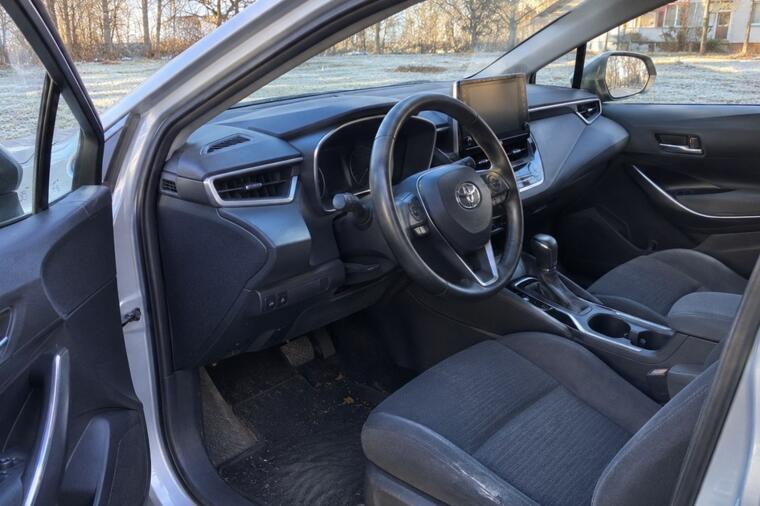
When you have a round five-figure sum sitting in your account, one question keeps spinning in your head: what is the best car to buy under 10000 euros so that your first trip to the repair shop doesn't leave you living on buckwheat alone? This price point is the most interesting threshold in the used car market. It is where practical eight-year-old city models meet fifteen-year-old executive sedans with leather seats. On classifieds sites, such a search often ends in dozens of phone calls and weekend trips to inspect cars "fresh from Germany" with undisclosed defects. At an auction, you make your decision based on the lot description and photos, while the price is determined by other buyers' bids.
Short answer. Under 10,000 euros, the safest choice is a 2014–2018 compact or mid-size car with a petrol or simple diesel engine. Set aside 800–1000 euros right away for initial work, insurance and registration. Go for an older executive sedan only when the description openly shows all bodywork and mechanical flaws.
The golden ten grand: why does a 10,000 euro budget open so many doors at auction?
A ten-thousand-euro budget opens up two paths: a tidy daily driver that won't require major investment, or a higher-class model whose flaws you assess in advance. At an auction, you can compare both paths in a single evening without leaving home.
On a classifieds portal, the buyer often sees the seller's wishful thinking: a price inflated with the thought "maybe someone will buy it, and if not, they'll haggle five hundred off." At an auction, the direction is the opposite: the price is pushed up from the bottom by the buyers themselves. At an auction, buyers compete live while the seller watches the bids. If a lot has scratches or an upcoming timing belt change, you factor these expenses into your bid right away, rather than trying to haggle in a yard next to the car.
The second advantage is saving your weekends and fuel. No phone calls before the deal and no trips to inspect the car. Instead of driving three hundred kilometres to the other end of Lithuania only to find a freshly washed engine dripping oil, you can examine the lot description and photos on your screen in 15–20 minutes.
A fresh economy car vs. a tired executive sedan: what is the best car to buy under 10000 euros?
When considering the best car to buy under 10000 euros, the rational choice is a 7–10-year-old economical compact model or estate, while the emotional choice is a 12–15-year-old prestige sedan or SUV. On the day of purchase, both cost roughly the same, but the difference becomes clear the first time you visit a repair shop.
Let's compare the post-purchase expenses awaiting you in Lithuania:
- Compact and mid-size class (e.g., 2015–2017 Volkswagen Golf, Škoda Octavia, Toyota Auris, Ford Focus). Replacing a timing belt kit including labour will cost around 250–400 euros, a new battery 80–130 euros, and four new R16 tyres 240–320 euros.
- Executive class and larger SUVs (e.g., 2010–2013 BMW 5 Series, Audi A6, Volvo XC60). On some three-litre diesel engines, the timing chain is located next to the gearbox, so the engine has to be removed to replace it, pushing the bill into four figures. A set of R18 or R19 tyres will cost 450–700 euros, and replacing an air suspension spring costs 300–600 euros per side.
On top of these amounts, add the registration (pollution) tax that you may have to pay at the vehicle registration authority of the seller's country (in Lithuania — Regitra, the agency that registers vehicles) when registering the car in your name. It is calculated based on CO2 emissions, so an economical 1.4-litre petrol car is taxed significantly less than a three-litre diesel SUV. Check the exact amount before placing your first bid. Only buy an executive car for 9000–10,000 euros if you know its repair costs and are ready to pay for the comfort.
Where the true value lies: how to read an auction lot description and photos?
A car's true value at auction can be seen in the details of the photos, the VIN history and the list of defects written up by the seller. A good lot is one whose flaws are shown in advance, allowing you to calculate a repair estimate before you even bid.
Before your first bid, spend 10 minutes on four steps:
- Body panel gaps and shades. In daylight photos, look closely at the gaps between the front bumper, wings and bonnet. If the gap is a finger's width on one side while the parts touch on the other, the front end has been taken apart or has taken a hit. Inspect the bottom of the sills and the rear wheel arches: surface rust can be fixed by a painter, whereas a sill rusted all the way through will have to be re-welded and repainted.
- Instrument cluster and interior wear. In the photo with the engine running, the Check Engine, airbag or ABS warning lights must not be lit. Look at the steering wheel, gear lever and the side bolster of the driver's seat: if the cluster shows 160,000 km but the steering wheel leather is worn down to the foam, the true mileage is most likely higher.
- History and roadworthiness inspection. Order a history report using the VIN code: it shows previous accidents and mileage records. In Regitra's public data, check when the roadworthiness inspection expires.
- What listed defects mean. If the description says "front suspension knocks" or "brake discs need replacing," that is good news for the buyer: the issue is known and can be priced. Replacing front brake discs and pads on an ordinary car costs about 150–300 euros, so subtract exactly that amount from your bidding limit.
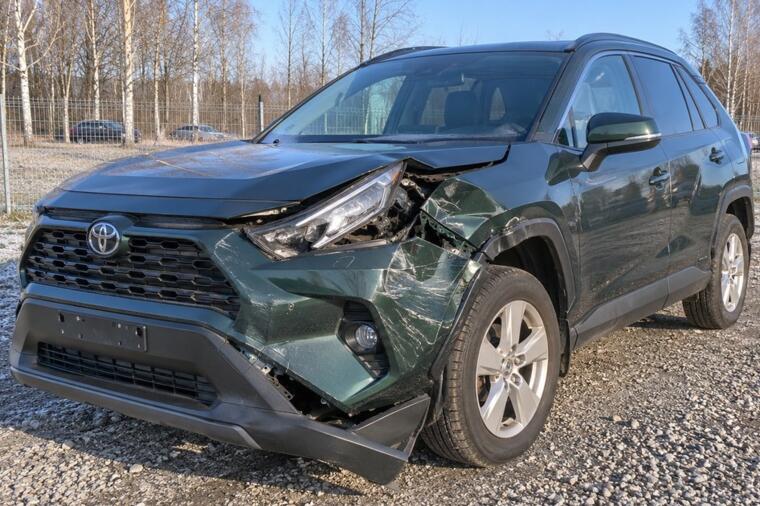
An auction also works for crash-damaged cars: salvage yards hear about it right away. A lightly damaged car under 10,000 euros is worth considering even for an ordinary driver, as long as you have your own mechanic who can tell a bent wing apart from a body geometry problem. The steps for a buyer at auction are described on the how to buy a car page.
Emotions aside: how to set your bidding limit and not give in to the thrill?
Calculate and write down your bidding limit before you even open the lot page, so last-minute excitement has nothing to latch onto. The most common mistake is adding "just another hundred" out of principle, several times in a row, until the budget is exceeded by a thousand euros.
The maths is simple. You have 10,000 euros. Subtract 200 euros for an oil and filter change after purchase, 400–600 euros for unexpected work or defects noted in the description, plus insurance and registration costs, which you should check in advance. If all of this adds up to about 1000 euros, your bidding ceiling is 9000 euros. When the price crosses this line, you close the window and wait for the next lot.
Seller protection works like this. The seller sets a reserve price: they won't sell for less. Buyers cannot see the reserve price; only the winner finds out what it is, and only if they haven't reached it. If the reserve price is not met, it is possible to negotiate with the potential buyer after the auction. For you, this means one thing: bid according to your own calculation, not guesswork about the seller's expectations.
Before bidding, it is worth reading the auction rules so you know the winner's obligations and payment procedure in advance.
How much money out of a 10,000 euro budget should you keep after buying the car?
Keep at least 800–1000 euros. This will cover registration at Regitra, compulsory insurance, an oil and filter change and initial work such as replacing the timing belt or brake pads.
With a 10,000 euro budget, is it better to choose a diesel or a petrol engine?
If you drive up to 15,000 kilometres a year and mostly in the city, choose a petrol or hybrid car. This way you avoid trouble with a clogged diesel particulate filter (DPF) and a dual-mass flywheel, and replacing the flywheel on a diesel costs 500–900 euros. A diesel pays off on long out-of-town routes.
What happens if my bid is the highest, but doesn't reach the reserve price?
Buyers cannot see the reserve price: only the winner finds out, and only if they haven't reached it. Then, after the auction, it is possible to negotiate an amount that suits both parties. If the offered sum does not satisfy the seller, they do not have to sell, and the auction can be repeated.
Is it worth buying a car with minor defects at auction?
It is worth it if the defect is described and you can put a price on it. Ask your mechanic how much the specific part will cost including labour, and lower your bidding limit by exactly that amount.
If you have already decided which model best suits your daily journeys, visit autoa.bid, browse the ongoing auctions and offer the price that is truly worth paying.
Related articles:
Website development: VDB.lt

Bid confirmation
By confirming the bid, I commit to purchasing the vehicle if I win (except for cases when undescribed/hidden defects are identified) and I take responsibility for the consequences of erroneous bids.
This bid is far above the current price

 Lithuania
 Latvia
 Estonia
 Poland
 All countries